Author: revalexjensen
Yale University, More Chaplain Interviews, and Historic Boston: Post #4
This is my fourth post for this summer, where I will provide an update on the exciting things happening on my end here in Cambridge!
Last week, I had the opportunity to travel with some of the undergraduate summer interns here at Harvard to Yale for a conference. This conference, sponsored by the Leadership Alliance Mellon Initiative (LAMI), was a conference aimed at undergraduates in the humanities and social sciences to increase diversity in academia within these broad disciplines. I had the immense privilege of meeting incredible undergraduate students from across the nation and, in some cases, other parts of the world. Surprisingly, I found I wasn’t the only student interested in studying theology and divinity at the graduate level. A small contingent of students––three other students!––and I headed to check out the divinity school at Yale, which happened to be quite the walk away from where we were on campus. There was also great fear over it raining while we had set out, which kept us wondering if we could make it back (after not having brought any rain gear) without being rained on; we did, which we partly speculate was due to some earnest prayers said in the divinity chapel… 😉
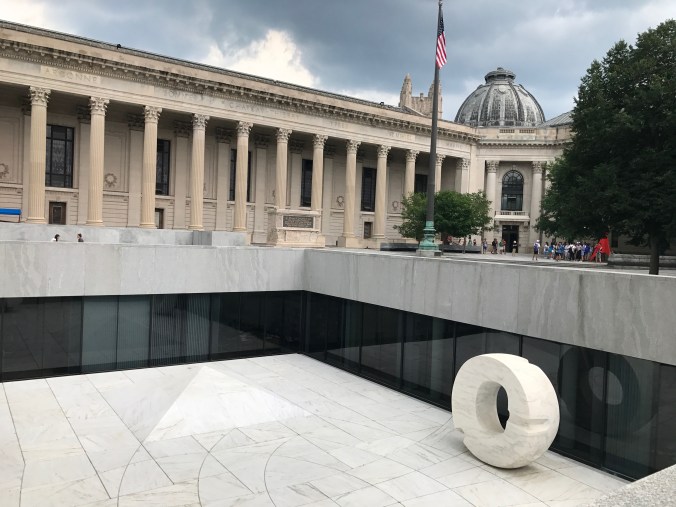
A picture outside one of Yale’s libraries.
Along with this incredible conference, I also have been hard at work scheduling and holding interviews with a number of military chaplains in the Unitarian Universalist tradition. It has been really impactful and humbling for me to speak with people who are some of the most selfless and caring out there. I have been met with immense support and kindness, with chaplains readily making themselves available to participate in my project. I am excited to finish up some of my final interviews next week (my final week at Harvard Divinity School for the summer!) and organize a set of qualitative data showing some common themes and threads across the interviews.
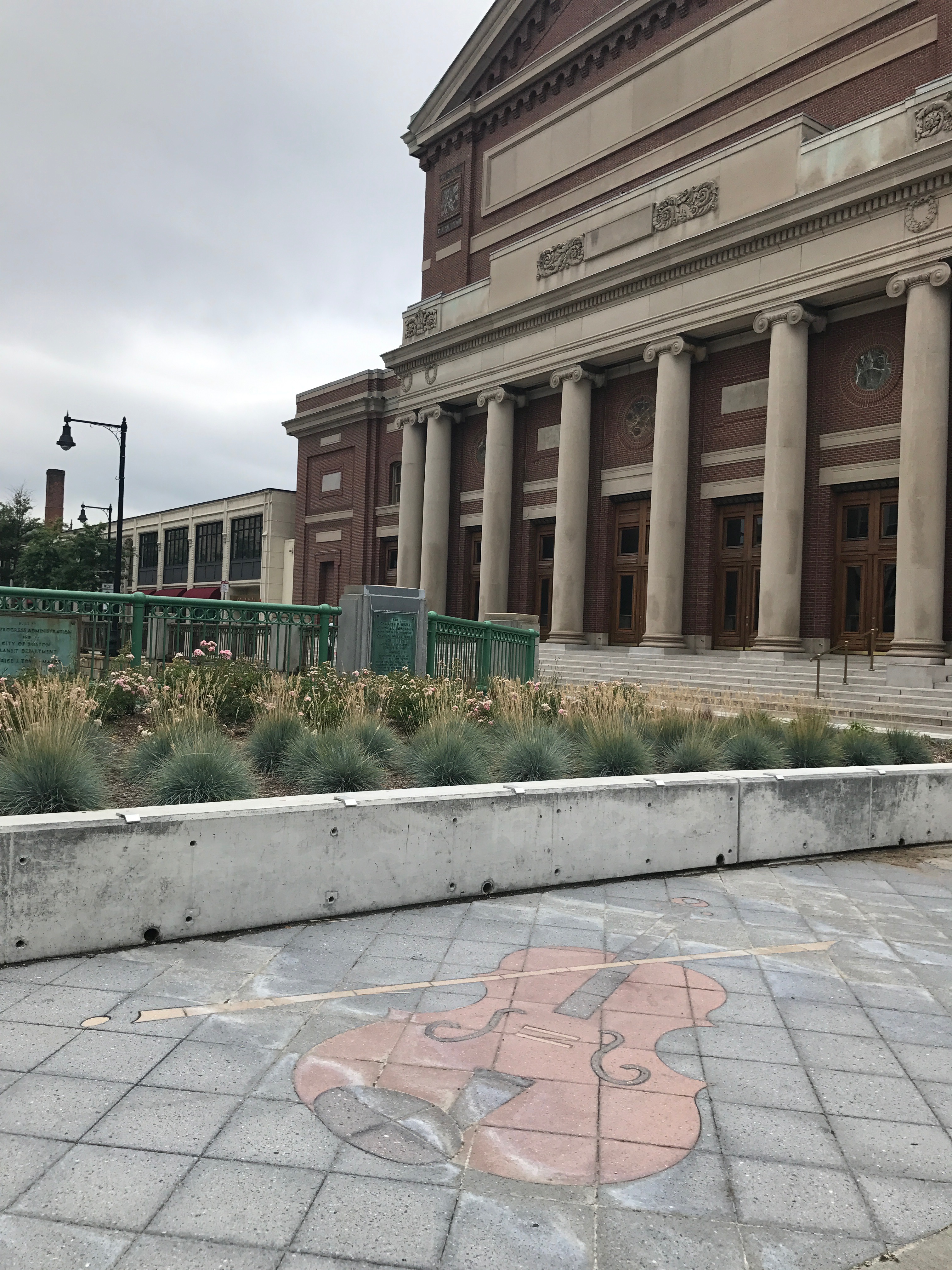
A beautiful violin on the sidewalk outside of the Symphony Hall in Boston.
I am partly embarrassed to mention that, while I have been in the Boston area for about two months or so, I had only made it to Boston this last weekend, where I went with one of my friends who is starting her program at Harvard Divinity School this coming fall. Yes, it took me a long time to get out of the library and visit some of the incredible historic sites! It was really wonderful to get to go to Boston and do neat things, like walk the Freedom Trail or sit in a pew of the Old North Church, where you find yourself literally in the midst of history. It is an amazing feeling to be in an area where so much has happened in the fairly short history of the United States. It was really restorative for me to also bring my camera along and take some neat photos. I thoroughly enjoyed traveling across Boston, walking somewhere in the range of eleven miles in the process!
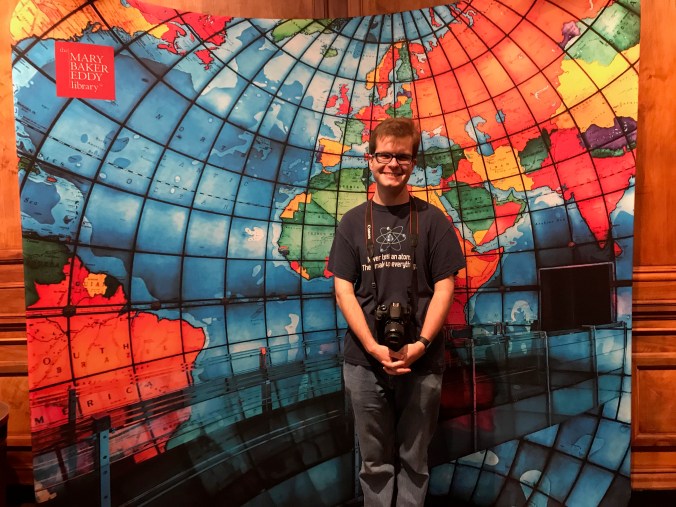
At the Mapparium within the Mary Baker Eddy Library in Boston!
Right now, I am gearing up for my final week in Cambridge. I find myself growing sad to think about leaving because I have really grown to love living here. I do, however, miss aspects of California. I miss Californian Mexican food, weather ranges, and wilderness! I am eager to be back in the Monterey area to start my final year at CSUMB this fall. I have a long week ahead of me, with my final paper due this coming Tuesday in a semi-final draft format, a couple of my mentor’s projects for me also due Tuesday, Summer Seminary programming that I am assisting with this coming Friday, my flight back to California this coming Saturday, and my move back to CSUMB this Sunday (which also cues the commencement of RA training for the fall!). I know I will finish strongly and that I will get through all of this work. In the end, this has been a very transformational experience for me and has really shaped my own personal confidence in research and scholarship. I am sad to leave but, at the same time, so excited for things to come!
Stay tuned for my fifth and final post for this summer in the coming weeks. Take care and may you enjoy a wonderful weekend :).
Germany, Chaplain Interviews, and Fireworks: Post #3
I apologize in advance for the lateness of this post; I had intended to release it last Friday but had many other things to attend to. Nevertheless, here is an update on what’s been going on:
Almost two weeks ago, I was lucky enough to take a trip to Germany. This was an awesome trip, where I was able to visit Berlin and see sights around the area. It was impactful to see important landmarks, like the Brandenburg Gate and the Bundestag, as well as visit more harrowing sites, like the Sachsenhausen concentration camp. It was a nice break in my research and allowed me to think about other things and feel refreshed in getting a change of scenery.
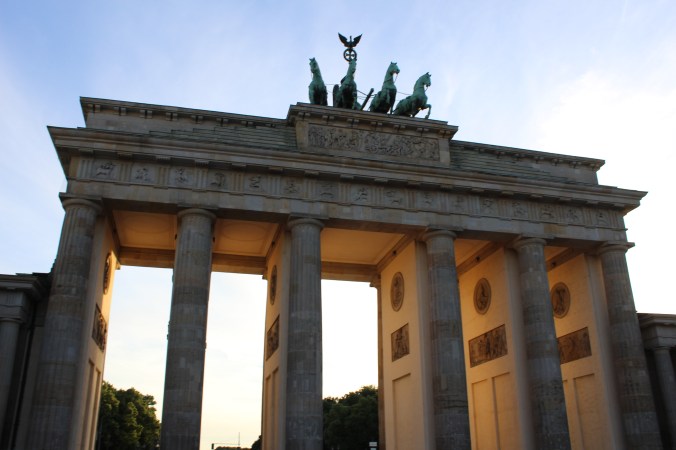
The famous and majestic Brandenburg Gate.
These coming weeks, I’ve been conducting interviews with current and former Unitarian Universalist military chaplains to explore ways in which they have aided service members with their moral injuries and discuss typical ways in which chaplains do and should respond to instances of moral injury in the individuals they serve. It has been powerful and meaningful to hear from absolutely amazing people who are so selfless in their work to serve others. I have also been blessed with having so many chaplains respond enthusiastically to my call for interviews; I am excited this week to talk to more chaplains about their experiences.
Last week was also the week of July 4th. I understand that for some this date is not a date worthy of celebrating or commemorating, as it has certain harmful political, social, and cultural implications. Authentically speaking, I enjoyed witnessing the beautiful and colorful fireworks above Boston, as viewed from the fifteenth floor of William James Hall on Harvard’s campus. It was a stunning sight and lasted for about thirty minutes. The other Harvard research interns and I were pleased to see the event conclude around 11:00 PM, which we happily celebrated as an opportunity to get to bed shortly after to rest up for the days ahead; I guess we really aren’t much of a party crowd! All in all, I really enjoyed spending time with the other interns at Harvard over the summer.

Fireworks above Boston.
This week, I am thrilled to travel with some of the undergraduate interns to the LAMI Social Sciences/Humanities Day at Yale University. This will be a neat opportunity to network with other researchers and visit Yale’s campus. Aside from that, business as usual :). Thank you for taking the time to read my post and stay tuned for further updates, should updates interest you! I wish you a bright week ahead.
Microfilm, Duck Boats, and Flowers: Post #2
It’s been two weeks since my last blog post and a lot of progress has been made in the way of my research and the research project of my mentor. In addition, I have had the opportunity to participate in some really neat events over these weeks.
On Sunday of last week, I had the fun of going on one of Boston’s world famous “Duck Tours” with some of the other research interns at Harvard. The vehicles we were on are called “duck boats” because of their history; these vehicles are replicas of the Word War II era DUKW boats, called “ducks” because of their ability to be both on land in the water. Needless to say, we got a really neat tour of Boston driving on the streets and diving straight into the Charles River! It was a really unique way to see a lot of the historic sites.
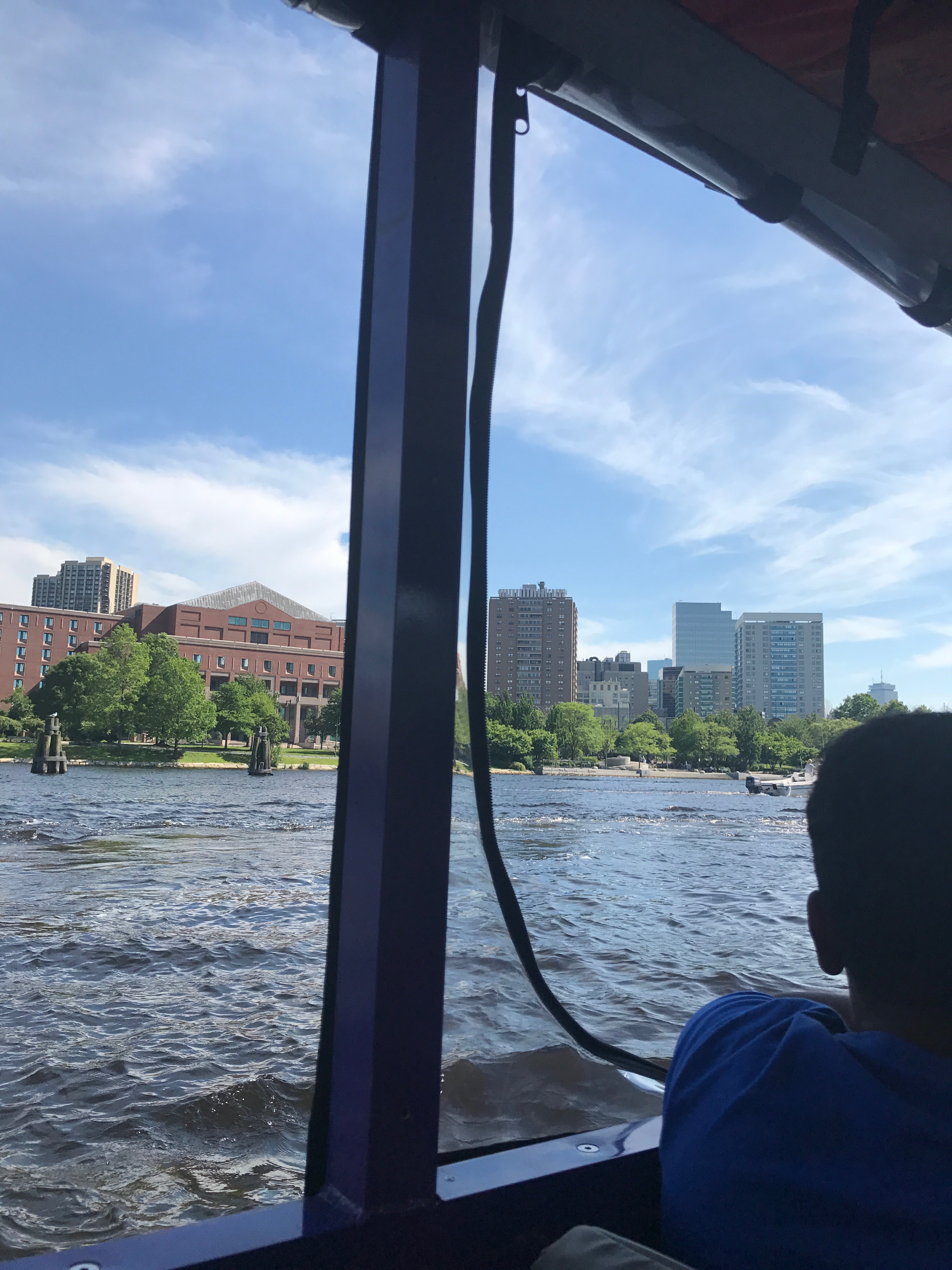
On the Charles River riding on a DUKW in Boston.
That same Sunday, I was lucky to also participate in an annual service in the Unitarian Universalist tradition called the Flower Communion. This service symbolizes the individuality each person brings to the community, shown in each person bringing a flower of their choosing and then leaving the service with a flower different from the one they brought. This ceremony is also to show how we take different ideas and pieces from the community with us as we worship together each week. To my luck, The First Parish in Cambridge, Unitarian Universalist, was the first place this ceremony was celebrated amongst Unitarian congregations in the United States after it was brought from the Czechoslovakian Unitarian tradition that created this ceremony to give liberal religion a communal celebration (much like Communion/Eucharist is celebrated in many other Christian traditions) with some form of a sacred ceremony, yet still retaining our liberal identities and theologies. This was also the first Sunday service I participated in on the East Coast, so it was really wonderful to be welcomed so openly by other Unitarian Universalists in the Cambridge area (First Parish is also right across the street from Harvard Yard, so its proximity is really close to where I am staying).
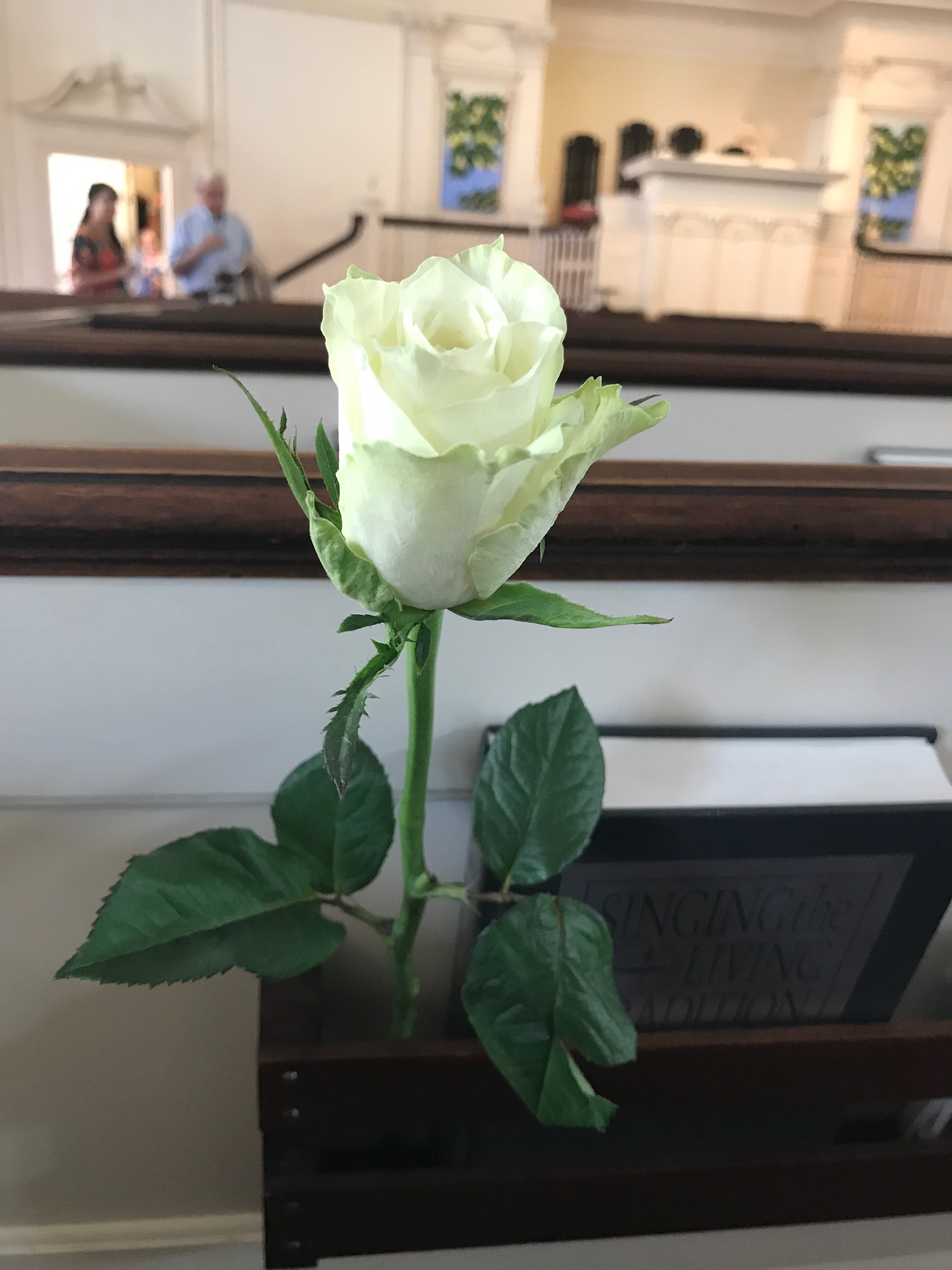
My flower before the ceremony, with First Parish’s beautiful sanctuary in the background.
With regards to research, this past week I have been able to use a digital microfilm reader to view and scan previous editions of The Christian Register, the old Unitarian monthly publication full of church news, prominent figures of the church, and points of discussion. I have been scanning these editions from 1936 to 1960, looking for figures my mentor has asked me to keep an eye out for, for his own research. I have also been scanning these publications for discussions of the military, chaplaincy, or any potential aspects of moral injury that might be discoverable (as this timespan also coincides with World War II). It has been a really neat experience, with my finishing scanning of the final microfilm reel today (phew, lots of scanning spanning decades this past week).
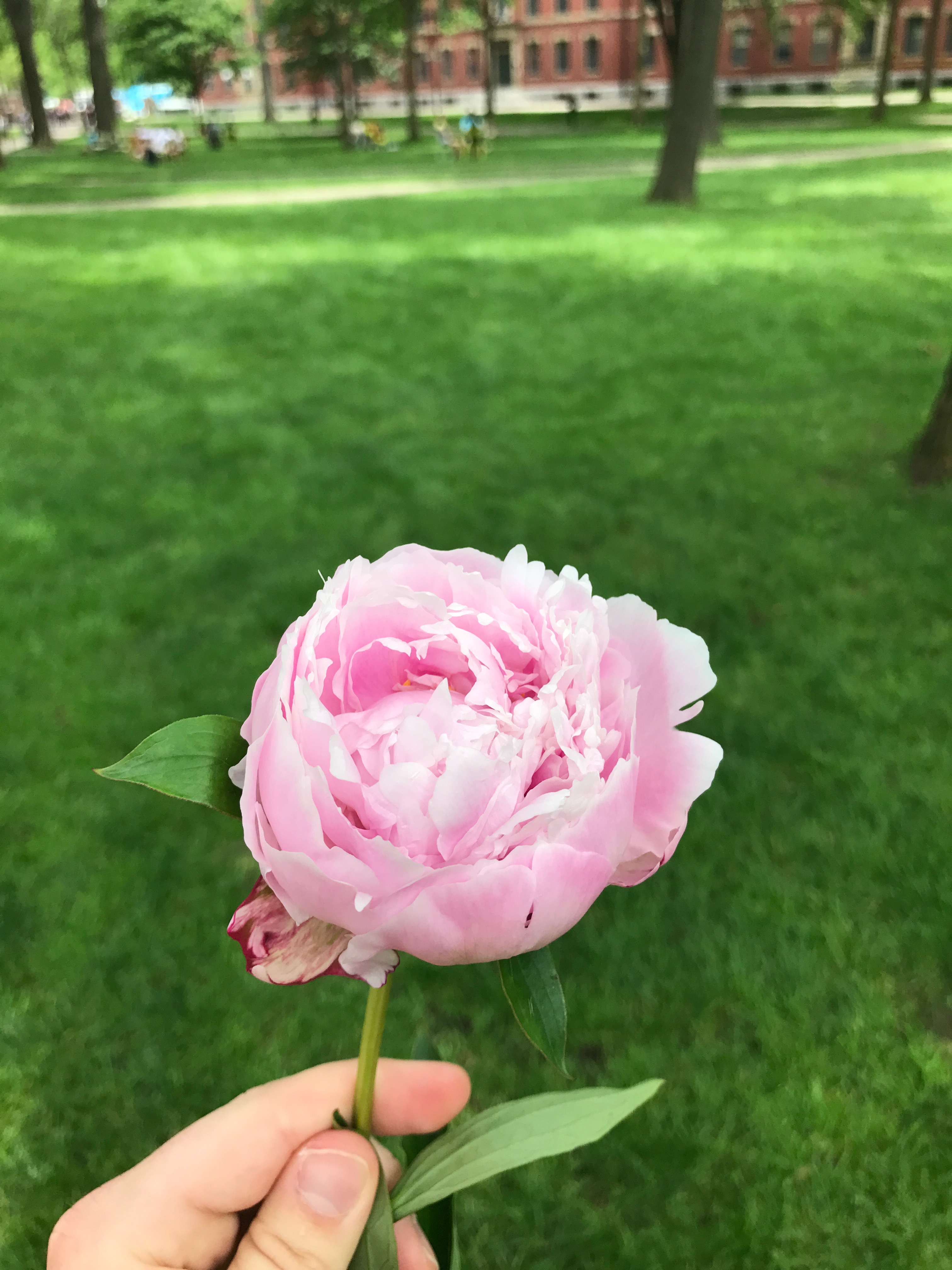
My flower after the ceremony.
As I write this, I am also excited about an upcoming trip to Germany for a week with my mom. My flight to Germany leaves tomorrow evening and I am excited to have this opportunity to travel and see another part of the world. I will be sure to take pictures and post updates of any neat things I see during this trip. Until then, I wish you well. Thank you for reading this post and stay tuned for more updates to follow :).
Chaos, Yet Grace: Post #1
It’s been about two weeks since I started my research at Harvard Divinity School for the summer. In that time, a lot has happened; some things quite interesting and other things quite eventful! Here’s a post to catch you up on what’s been happening.
Leaving at 5:30 AM on a Saturday from San Jose International Airport on a flight to Boston Logan Airport, I arrived in Boston around 8:00 PM local time. After several hours of flights, I was tired, but still very eager to get from the airport to a place with a nice warm bed. After a short car ride to Somerville (one of the neighboring communities surrounding the Cambridge area), I arrived around 9:00 PM on the front porch of an apartment building that was listed to be my interim stay for the week; the dormitories at Lesley University were not open until the following Sunday. A little confused, I knocked on the door and rang each of the three doorbells (each floor had its own bell to alert people living in the building to greet their guests at the main door of the entrance) hoping to reach someone in order to check into my room. After five minutes of no response, I got the sense that something was wrong.
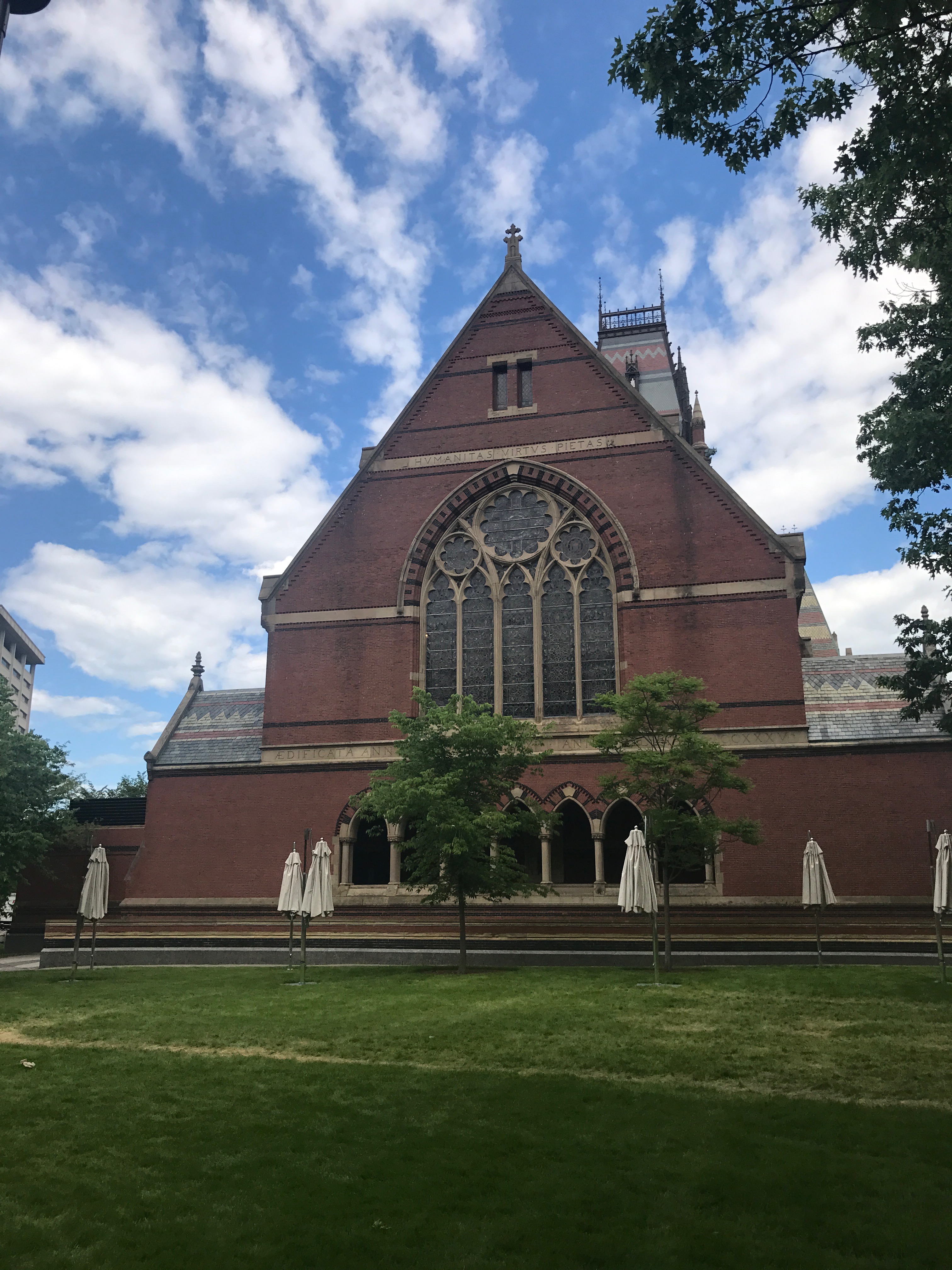
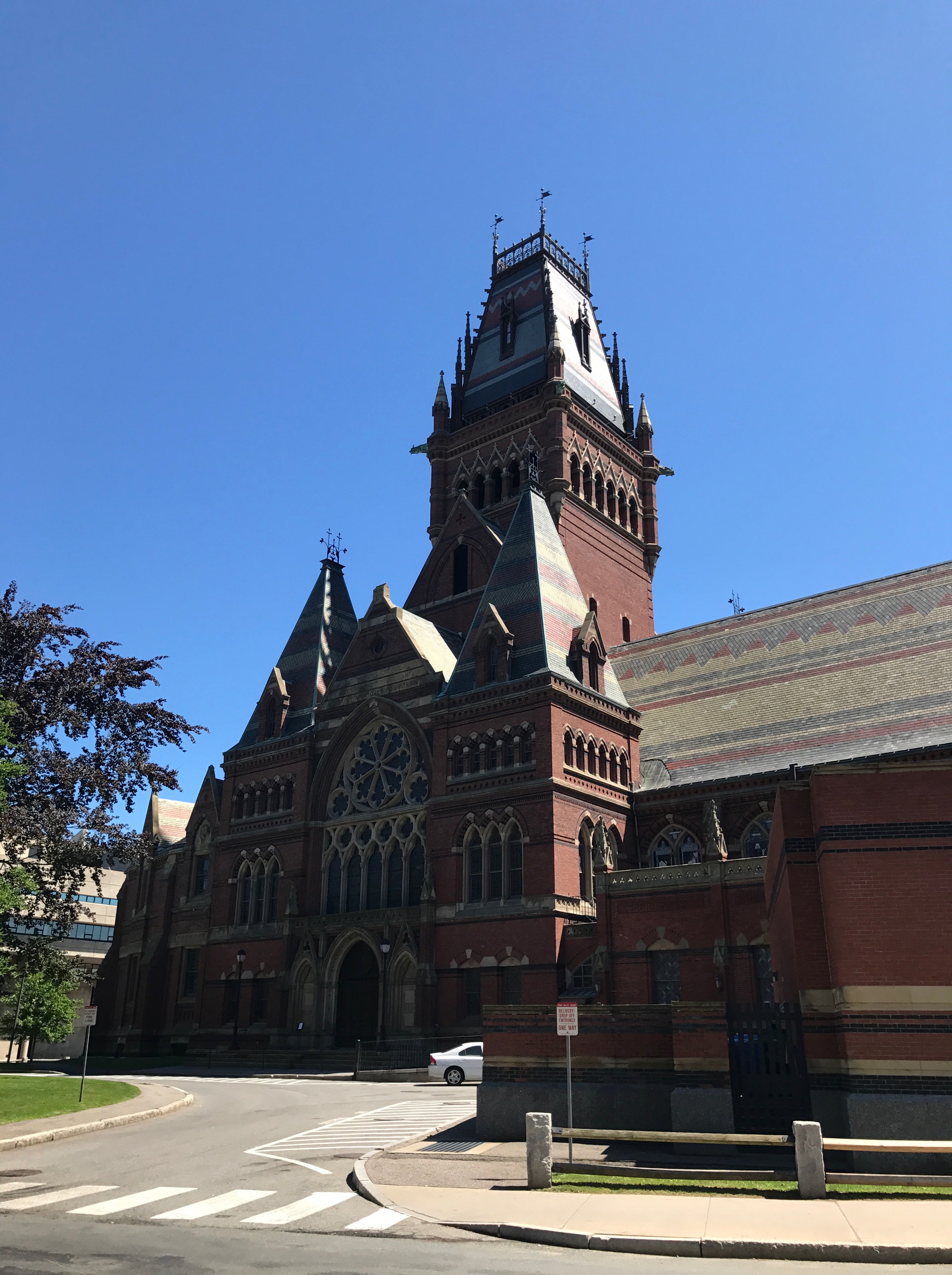
Memorial Hall, built in honor of 136 Harvard students who had fought and lost their lives for the Union in the US Civil War.
After a few more minutes of waiting, a man appeared from inside the building carrying a couple of bags of garbage. Still worried and confused, I asked him if he knew anything about the housing listed online. Sadly, he didn’t know anything of the sort and was about as confused as I was. After examining the images of the listing (according to him, the bathroom and bedroom photos didn’t look anything like the rooms offered in the apartment) and the name of the person listing the option, we determined that the listing had been an unfortunate scam. Distressed, I frantically called numbers of people I knew to see what support I could gather.
During this time, the man’s girlfriend came down to check up on what was happening. Welcomingly, both of them explained that they were headed to a local Indian restaurant to pick up food for their visiting families. One of them had just graduated from a Masters program at Harvard and both sides of the family had flown in from England and Pakistan to celebrate the commencement. The couple invited me to leave my heavy luggage locked inside their apartment while I traveled with them to the local restaurant, minutes down the street. During this time, I left my luggage safely locked away and made some emergency phone calls to receive accommodations for the night.
Another view of Memorial Hall.
After my securing a hotel room at the Harvard Faculty Club (this was the only option available, as all of the other hotels in the area were booked up for not only commencement weekend but Memorial Day weekend!) and their purchasing food from the local eatery, the couple and I walked back to the apartment. The two of them treated me with such kindness, inviting me to have dinner with their family; I was a total stranger, yet they wouldn’t take no for an answer and had me climb the floors to meet their relatives. They had also explained to me that this was the first night of Ramadan and that they were more than happy to share their meal with a stranger. Mothers on both sides of the family assured me that I reminded them of their son/daughter and said that I was now a member of their family. I was touched with so much grace in this time of panic. After a delicious meal and lots of laughter about the whole incident, I finally gathered my things, grabbed the mandatory dessert I just had to try for the road, and headed to the hotel’s location. It had been a long night, and I was glad to finally be in bed resting. The next day I was able to call for support from the online listing service and received a booking for an alternate listing that wasn’t a scam! Everything seemed to work out.
I am now writing this from the comfort of one of Lesley University’s dorm rooms. After two full weeks of research, I’ve been exposed to some really incredible things. At Andover-Harvard Theological Library, I am given the privilege of using the library’s historic archives and special collections to find primary source documents for my research. The current trajectory for this summer is to explore the concept of moral injury, as I previously compiled a literature review and conducted interviews with representatives of veterans organizations last summer, and how military chaplains, particularly Unitarian Universalists, work and historically have worked to address the moral injuries of those they serve. While in the archives, I am able to leaf through extensive files of chaplain letters and correspondences, as well as hold yellowing letters from the time of the US Civil War in my hands. It’s really both incredible and chilling.
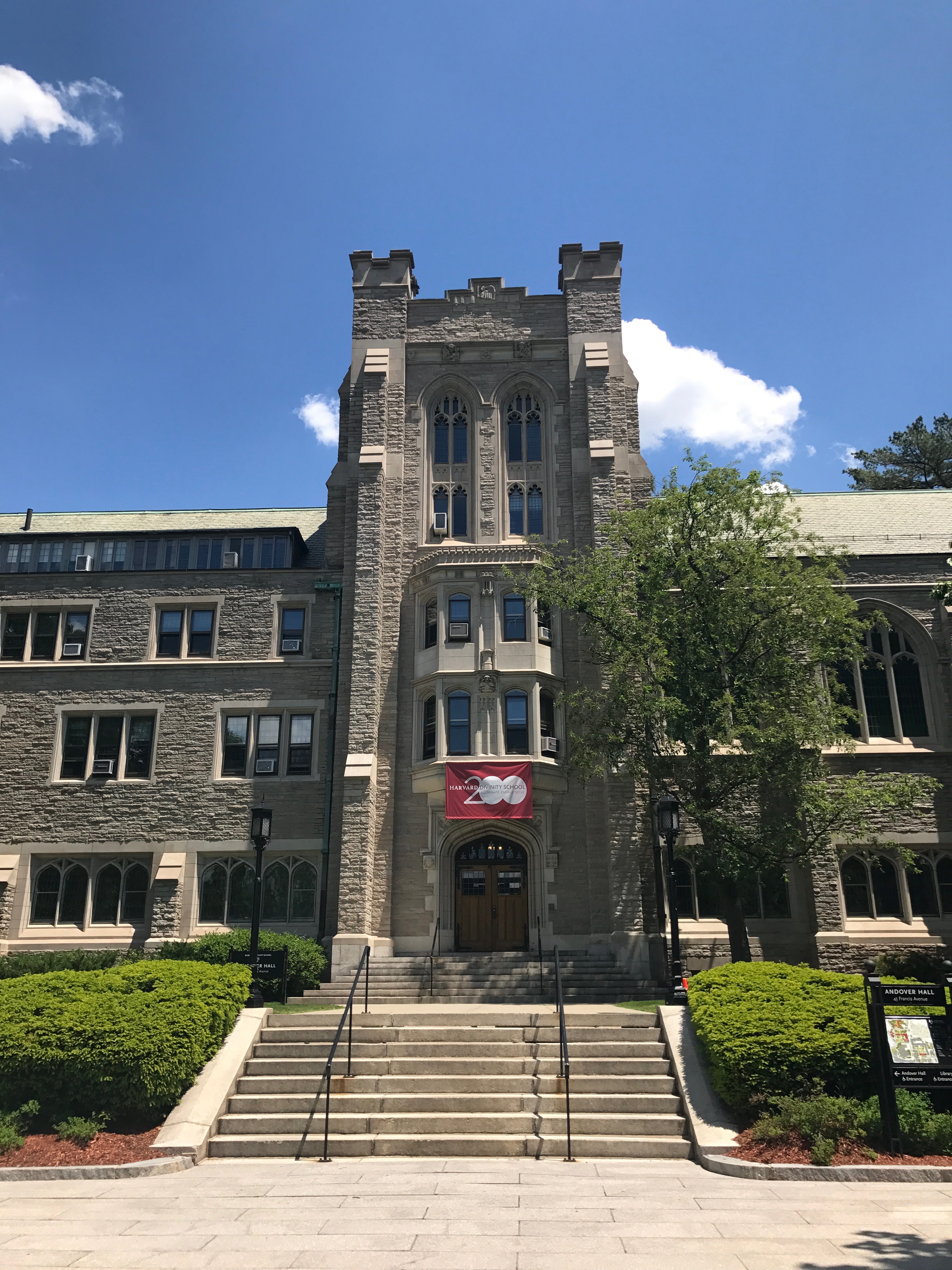
A picture of Andover Hall, one of the historic buildings at Harvard Divinity School. In the right wing of this building is Andover-Harvard Theological Library, which serves as my primary workspace; the library also heralds itself as the friendliest library on campus.
While new to the Cambridge area, I have been able to walk around quite a bit and explore the surrounding areas. As a campus, Harvard is absolutely mesmerizing. There is so much history packed into a short area of campus. The surrounding area is also full of a lot of history; one can hardly walk down the sidewalk without coming upon an old tombstone or historic monument of some sort! Overall, everything has been really wonderful since arriving here in Cambridge. I am very excited for all that lies ahead.
In the meantime, I wanted to share some words that have spoken to me recently:
“The practice of prayer was not intended for the times when everything is going smoothly with us, though prayer is of inestimable value at all times. Prayer is really intended most of all, however, for just those times when we are surrounded by difficulties, when the problems and dangers of life are most threatening. When doubts and perplexities arise, then is exactly the time when prayer ought to be most easy and natural, for it is those times of distress that make most clear our need of divine help. Instead of ceasing to pray when we find difficulties in the way, we ought to seek the presence and guidance of God with all the more earnestness.”
—The Rev. Dr. Frederick May Eliot, 1918
I came across these words in a sermon I uncovered in the archives. Although I do not hold prayer in the same theological meaning as Eliot (he was a Unitarian minister with a different, yet still similar, theology to Unitarian Universalists today), this has served as a reminder to me that it’s okay to ask for help when things get rough. While amazing in almost every aspect, this trip so far away from CSUMB has been overwhelming too, with all of the research ahead of me and the intense internal pressure I place on myself to do this research to the absolute best of my ability. The unexpected dinner with the family upon my arrival taught me this simple truth: in being connected to aspects greater than myself in times of greatest difficulty, I can find a wider sense of community and peace.
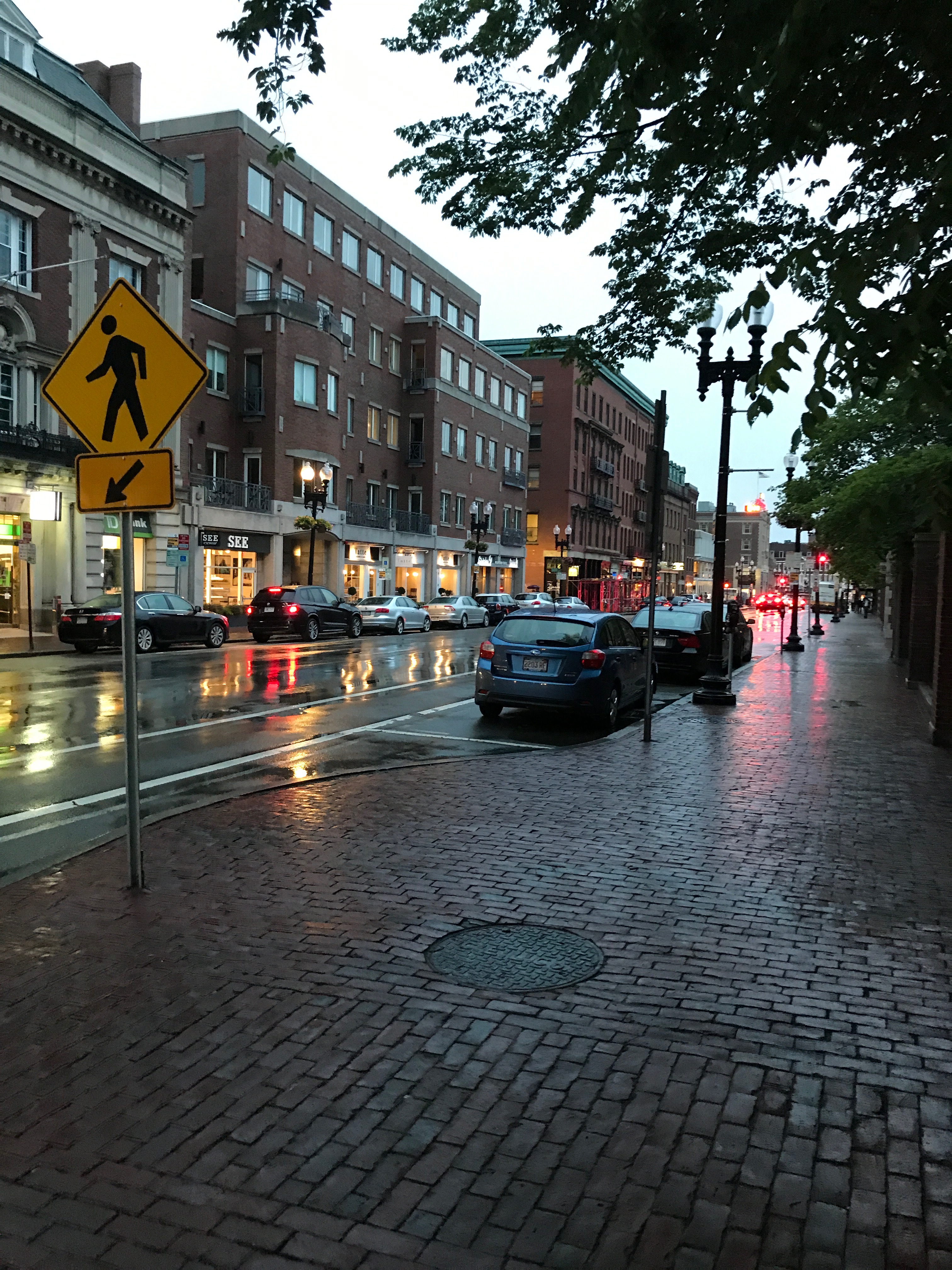
A rainy day in Cambridge, just outside Harvard Square.
I send this gentle reminder to all of my fellow researchers from UROC at CSUMB; remember that you are not alone and that even though we are far away, we remain a closely connected community. I wish you all well with this summer’s research and I look forward to hearing all about it the next time we reconnect.
Living Flaw-fully: Post #5
“What you are authentically is alright. It’s the shame that kills you. Believing that you are unworthy of love and belonging or that who you are authentically is a sin or is wrong, is deadly.”
—Laverne Cox
I wanted to use this post to get away from the subject of moral injury for a little bit, yet still keep things related to research and preparing for the upcoming Summer Research Symposium at CSUMB. I have been given a tremendous honor and privilege to deliver an oral presentation at the symposium this Friday, which is both really exciting and slightly terrifying. Also, I am excited to report that I will be heading on a flight to Ft. Worth, Texas to visit Brite Divinity School’s “Soul Repair Center” on Monday, where I will have the honor of interviewing the Rev. Dr. Rita Brock, one of the authors of the book, Soul Repair. With my mind on so many different moving parts—on what I still have yet to finish up, edit, and perfect, and all that I have to anticipate about how this event will go—I got to thinking about how honestly I am right were I need to be at this point and time in preparing for presenting my research.
As Malachi reminded me in one of his blog posts a couple of weeks go, making mistakes is a very essential and important part of the research process. Speaking from my own personal experience, I am a person that very much doesn’t like to fail.
In other words, I am afraid of failing and letting others see my flaws.
When I was in elementary school, I struggled greatly with my writing. At the time, I didn’t much appreciate all that writing has to offer, due to my negative associations with it. I would write as hard as I could, smudging graphite into lined paper, as I etched my responses to the boring prompts into existence. Thinking I did my best, I was always met with surprise with all of the things I had to fix with my writing: incomplete thoughts, run-on sentences, different grammatical issues, and, the most difficult aspect, the lack of an authentic voice.
My writing, I began to see, was a flaw of mine. And that’s how I learned to face it.
My teacher for both fifth and sixth grade was so instrumental in the development of my writing. After building such a negative association with writing, my teacher picked up on what I needed to really fix about writing: I had to learn to write with passion instead of with this built up negativity. My teacher, after going over one of my previous essays with me, sat me down at got me to view writing from a very different lens:
“Alex, what you’re missing here is that you don’t seem to have something you like to write about. Do you have something you like to write about? How about your violin music; can you try to write an essay about that?”
I immediately got inspired and began to write, and write, and write, AND WRITE! all about what I knew about music. I had so much fun with this essay that it completely transformed how I looked at my own writing. I started to infuse what I had to say about something into my own authentic writing voice and style, and thus learned to overcome my struggle with writing. Six years down the line, I found myself scoring a 5 on the AP Literature exam my senior year of high school. To this day, writing has been one of my greatest triumphs. And it absolutely required me to fail before I found what I was missing.
Sometimes we learn from our flaws.
With other things in my own life, I’ve had to reframe how I view aspects of who I am. For me, one of the things I’ve had to wrestle with is my sensitivity. When I was little, I was constantly hounded for being a sensitive boy. I would often be told things like “boys don’t cry,” “boys don’t hang around their mothers,” and other things from concerned relatives and other adults. I was known for wearing my heart on my sleeve and I always saw this as a reason to be ashamed of who I am.
This led to me feeling a lot of insecurity growing up, as I constantly felted judged up against this gender stereotype that I didn’t seem to fit. This naturally led to my being bullied a lot when I was younger for being “soft.” Yet my being sensitive has opened the door for me to be truly caring with people, especially in difficult and trying moments of their lives. It has opened the door for people to trust me in being authentically vulnerable. I have been given a true gift in being privileged to experience the lives of people around me. And I wouldn’t trade this gift for the world.
Sometimes, our flaws become our biggest strengths.
With my research, I have been very worried about making mistakes and failing. This isn’t the mentality to be fostering about research! From my past, I have become equipped and ready to make mistakes and to grow from failure. I shouldn’t look fearfully at research.
Making mistakes and living authentically into who we are are deeply important parts to living an honest human experience. But in order to live honestly, we must be prepared to fail. We must be prepared to challenge ourselves to counter what people may think or say, as well as our own misconceptions. We must live fully into our “flaws,” embracing our whole selves, especially when our flaws turn out to not be flaws after all.
I challenge you to be open to experiencing failure. I give you permission to fail, and to fail horridly! No matter who you are or what you have come to see as a negative aspect of who you are, your experience matters. Embracing flaws must also be part of that experience.
For your own response: what is a time that you’ve struggled with failure? What is one of your own “flaws” that you’ve had to wrestle with?
May you find peace in the stressful weeks ahead. I know you’ll do wonderfully 🙂
Being Open: Post #4
*Content Warning: Discussions of violence, combat, warfare, PTSD, and moral injury*
“To be trustworthy, a listener must be ready to experience some of the terror, grief, and rage that the victim did. This is one meaning, after all, of the word compassion.”
—Achilles in Vietnam: Combat Trauma and the Undoing of Character, by Jonathan Shay
Some of the major questions I have been wrestling with throughout this research are the questions: is supporting returning veterans supporting violence and combat? Can one support service members while simultaneously being against the institution of war? How can supporting former combatants ensure peace in the future?
As I previously mentioned, war itself is not something I am comfortable with. As a US civilian with no experience serving in the armed forces, there is much about warfare that I do not know and understand; I don’t know what it’s like to be in an active war zone where split-second choices that result in life or death need to be made; I don’t know what it’s like to be shot at or take life; I don’t know what it’s like to live in fear of what I might have to do, or worse, the fear that others won’t understand what I’ve been through. As a person of faith, I find a deep conflict between war and my religious values that call for a world at peace with liberty and justice for all of its people. That being said, learning more about moral injury and warfare in general has caused me to think very deeply about these questions.
One of the profound realizations I had, in reading these stories, was through exploring the motives behind why people choose to go to war and serve in our nation’s military. Soldiers become soldiers for a variety of different reasons. Some of the large motivators include: wanting to serve your country; wishing to make a positive difference in the world; looking for a life with honor, integrity, and structure; defending the freedoms of the nation and civilians at home. The motivator I wasn’t anticipating, which some regard above all others in pursuing military service, is one of finances. The military offers people jobs.
After reading a book talking about the various reasons people join the military, my eyes were opened to the fact that many times people with low socio-economic statuses join the military for this reason. For some, this is one way they can provide for their families. People of color, women, and low-income individuals are disproportionately more likely to enter military service. Ads are also targeted at teenage audiences, with images of incredible glory and valor in soldiership, to encourage more and more youth to sign up once they reach eighteen. This is important in understanding the effects of war because these are more and more the people coming home from it.
As warfare has progressed in technology, much has been done to ensure a minimization of damage to our side, yet simultaneously we see an increased systemic disregard for collateral damage of “the other” side (i.e., civilian casualties) in war zones. Yet, when looking at this through the lens of moral injury, one must ask if damage is really being minimized after all, considering that moral injury has been called the “signature wound” of service members returning from Iraq and Afghanistan.
As mentioned above, people also join the military to make a difference in the world. People want to defend the constitution and serve their country. People don’t enter our military to intentionally pursue military service that is morally questionable. This disconnect between what our nation’s public knows about war and the realities service members face is perhaps one reason we are seeing such a rise in moral injury as of recent conflicts. So many returning service members know the civilians in their day-to-day lives don’t understand what they’ve been through, or even fear judgment from them.
To begin to unpack some of these difficult questions, I don’t believe supporting those who have been tasked with fighting on my behalf is inherently supporting violence or combat. In fact, it is in allowing ourselves to experience, through the shoes of someone returning from combat, the moral ambiguities of these situations that we also give ourselves permission to sit with them and feel what they are feeling. As the quote suggests, if we want to be trustworthy listeners for veterans, we must first give ourselves permission to feel their pain. We must be open to these persons and allow them to share their fullest selves with us, should we hope to gain their trust and assist them on their journey to psychological and spiritual well-being. Through their eyes, and with their trust, we may begin to experience and understand these hidden realities of war.
Once we better understand what our nation’s soldiers go through, we might be more reluctant about sending them to war in the first place. This new awareness of veteran’s struggles may pave the way for more peace building. But it does require us to be accountable to those who fight on our behalf. We cannot hope for more peace while so many are not at peace, left to grapple with their experiences on their own. In my opinion, fostering understanding of our veterans’ full selves, including the parts of them that return from war, is inherently a peace building aspect. We allow ourselves to be transformed through listening and can no longer ignore their common humanity.
In short, I encourage you to be open. Take a step outside of your comfort zone and be willing to experience life from another’s perspective. Cultivate an understanding within yourself that’s big enough to make room for these complexities. We yet might be able to make room for ourselves to learn in being open to listening.
Even if you are afraid of what you’ll hear. Even if you are against violence. Even if you do not support the military. We must support those who serve for us. And we must make a place at the table for them to share their struggles.
Sharing in Their Pain: Post #3
*Content Warning: Discussions of violence, combat, warfare, PTSD, and moral injury*
“Our veterans’ terror is real. They come home stumbling out of hell. But we don’t see them as they have become. Instead, we offer them beer and turkey dinners, debriefing and an occasional parade, and a return to routine jobs and weekends in the shopping malls. Because we as a nation are trapped in a consciousness that cannot acknowledge abject suffering, especially if we have caused or contributed to it, we do not see the reality of war. Meanwhile, survivors feel trapped in that apocalyptic reality and rarely try to explain it to people who will not understand.”
—War and the Soul: Healing Our Nation’s Veterans from Post-traumatic Stress Disorder, by Edward Tick
Things are getting fairly exciting in the development of this research project. For the past six weeks, I have been reading articles, journals, magazines, and books, as well as listening to podcasts and watching documentaries and videos pertaining to the subject of moral injury (and moral injury within the realm of PTSD) and how it affects our nation’s returning veterans. This has been a very rewarding exposure in that I had little idea before the start of this project the importance of talking about moral injury, what causes it, and how to help those it affects heal. I also had little idea of my own personal responsibility to returning service members in doing my best to better understand what they go through once they return from service.
I am excited at the prospect of beginning to write the paper on this research. Alongside writing this paper, I soon hope to have some really wonderful and engaging experiences: Brite Divinity School has a Soul Repair Center, “dedicated to research and public education about recovery from moral injury,” that I hope to be able to visit and take a tour of this summer; I also have the honor and privilege of being able to speak with some great leaders of support programs for veterans in the Monterey County community. This project has really been meaningful so far and I can only wait for it to become more so.
What continues to surprise me is the genuine interest many people have in the topic I am exploring. I haven’t yet come upon a person who has not seemed fully engaged in discussing moral injury with me; many times, people are interested in really learning more about something they didn’t know was such a serious issue. I sense that many people do honestly care for our veterans and want to help share in the pain that many of them carry. This gives me hope that our nation’s consciousness around the experiences of returning service members will one day expand enough to hold all of the anguish, grief, and sorrow so many of our soldiers internally struggle with. It gives me hope that we can one day honor the full person, all of who they are, through civilians sharing in this broadened understanding of the true costs of war on a veteran’s moral conscience.
As a person who finds war at odds with a lot of what I believe in and value, I cannot deny my own personal responsibility to our returning veterans and service members who have fought on my behalf (perhaps even for a conflict I might not have chosen to support). I have a personal responsibility to these individuals to try my best in understanding and unpacking with them their pain. It is our moral responsibility as citizens to not leave this undertaking up to the individual veteran alone to suffer through and figure out; we, too, should better acknowledge the horrifying realities of war that we expect our returning soldiers to deal with.
As a Unitarian Universalist, the first principle I witness to is “the inherent worth and dignity of every person.” It breaks my heart that some people might return from war feeling that they have lost their personal worth and dignity for what they have witnessed or done. It pains me more to know that many carry this pain alone, for they fear other Americans cannot and do not understand their experiences, or may judge them for what they have done or failed to do. I have a personal obligation to validate their inherent worth and dignity as people, even when they cannot validate it themselves. They should not have to hide who they are and what they have gone through from the public’s eye, for fear that they have lost their humanness.
I hope to keep being humbled by reading about these morally injurious experiences and the lives that have been so deeply afflicted by them. I ask myself to hold this information close to heart so that it may transform how I understand the complete calculated costs of waging war.
A question for you: do you agree or disagree that civilians have a moral obligation and responsibility to returning veterans in sharing in their pain and anguish? Why or why not?
More updates will follow as my project continues to develop and take shape. Be well and thank you for reading.
The Joy in Lack of Control: Post #2
“When veterans return to our communities after war, we owe it to them and to ourselves to do our best to support their recovery. To do so, however, we must be willing to engage the same intense moral questions that veterans undertake about our own responsibility as a society for having sent them to war.”
—Soul Repair: Recovering From Moral Injury After War, by Rita Nakashima Brock and Gabriella Lettini

Unitarian Universalist Association General Assembly 2016 in Columbus, Ohio.
This past week has been quite the journey, with taking the week off of doing research in order to attend the UUA’s General Assembly 2016 (GA) in Columbus, Ohio, from June 22nd to June 26th. For those of you who are unfamiliar with Unitarian Universalism and how the denomination conducts its business, GA is the one time out of the year where thousands of Unitarian Universalists (UUs) convene in order to vote on policies and make decisions as one denominational body. I served for the second time as a delegate, a voting representative, on behalf of my home congregation, Mission Peak Unitarian Universalist Congregation (MPUUC), in Fremont, CA. GA is not only a time to make decisions as a national religious organization: it is also an opportunity to spiritually renew and refresh yourself as well as to forge new connections with people from all across the country, from a wide variety of backgrounds. This GA, I put together a workshop with a couple of other young adults talking about young adult interfaith work and our stories with it. To put it lightly, I was stoked (!!!) about this upcoming GA.
Getting to GA this year started out normally. As this was my third GA, I felt pretty confident with being able to make it on my own traveling across the country. Flying out of SFO and arriving in Washington-Dulles (IAD) was where the trouble began. Upon arriving at my terminal in Washington DC with plenty of time before my next flight, I noticed the navy United Airlines message board at my terminal giving me bad news: my flight from IAD to Columbus had been canceled due to weather conditions.
This is where my panic began! Being caught in an airport far away from home (let alone California) without a flight was both troubling and unnerving. To make matters worse, I was not going to arrive in time to GA to help lead my workshop. I frantically made my way to the nearest customer service desk to see if there was any possible way to be rerouted to Columbus. To my astonishment, I was met with a line of about fifty individuals, all from flights that had been canceled due to the rainstorm coming in over Washington DC. I felt my own anxiety build as I wondered if I would be making it out of this airport in time for another flight.
After speaking with a customer service agent, I was placed fourth on a standby list for the last flight out of Washington DC to Columbus for the day. I was told bleakly that this flight should be good for me to make, but that it would be overbooked and that there was no guarantee that they wouldn’t cancel this flight should the weather not clear up (meaning I would end up back in a long line of passengers attempting to escape IAD!). Making my way towards the terminal for my later flight, I ran into another passenger who was stuck in a similar situation. Her flight to Cancún, leaving from the same terminal area, had been delayed due to weather as well, meaning we were both in the same boat with navigating across this vast airport.
To my surprise, this passenger was one of the most friendly people I’ve ever met at an airport. Making our way to the terminal, she told me she was originally from Pennsylvania, traveling to Cancún to celebrate her recent certification as a nurse. I explained that I was a stranded Californian trying to make it to my church’s national conference. We became fast friends, perhaps due to the pressure of being at the mercy of the airlines and the weather to make it out of DC. To my delight, we began discussing some very deep subjects around religion.
Having this discussion made me realize the joy in not being in control sometimes. Sometimes we can be so wound up in our own illusions of control, especially when it comes to time sensitive traveling. Without warrant, we are quick to start playing the blame game: if the airline would’ve just let the plane fly, I wouldn’t be in this situation; if I had just paid for an earlier flight, I might’ve been able to make it out before the rain; if United hadn’t canceled all of these flights, I wouldn’t be waiting in an hour-long line to get a new ticket.
To be honest, aside from having these negative thoughts (or their positive alternatives), there isn’t much we can do in these moments that might make a better impact on our situation. I had already made attempts to get on another flight. I was already missing the workshop I had spent so long helping to plan. There was nothing more to be done. In my moment of desperation, I had to mourn the fact that I wasn’t in control, as scary as that sounds.

UUA Public Witness event titled “State of Emergence: Faith Filled People Rally for Racial Justice.”
The passenger from Pennsylvania gave me a pearl of wisdom with our discussion. Speaking as a Christian, she explained to me that God had reasons for everything that was happening, including making me miss some of my church’s conference. She explained that part of this missing my earlier flight meant we had the opportunity to have this discussion and become friends. In her eyes, we are always right where we need to be in every situation and one shouldn’t worry about things not going as planned. While I do not share this theological view of God (I don’t believe in God in a traditional sense of the word, let alone a Trinitarian-Christian sense), I appreciated the sentiment behind her words: this journey was out of my control. And it was going to be okay. I was going to be okay.
After saying our goodbyes, and her taking of the first of many selfies with me on her trip, I patiently waited at my terminal for my flight to arrive and for boarding to begin. After all of the groups had been boarded, the agent began reading names on the standby list. I was lucky and was the fourth and final passenger to be allowed on this overbooked flight. Sometimes we get lucky, even when we are not directly in control. I thankfully took my seat on the plane and landed an hour later in Columbus.
To give you all an update on my research, I had a breakthrough with the focus of my topic on moral injury. I want to focus my readings and research on how Monterey County can help both veterans and civilians cross what has become known as the “veteran-civilian divide,” or the lack of dialogue between veterans and civilians around experiences from war. As I mentioned in my previous post, veterans and returning service members sometimes feel a deep sense of shame around their experiences from war, especially those surrounding incidents of moral injury. One possible approach to helping alleviate this sense of shame is to foster open communication in a nonjudgmental environment between veterans and civilians, in order to allow civilians to get a better understanding of what members of our military go through and to allow veterans a chance at healing and self-reflection, understanding that their actions have not come to define them as people and that the public has made a space for them and is sharing in their sense of grief and regret.
Unlike my flight situation, one thing we do have control over is how we, as a public, respond to our returning veterans and service members. We are left with two central choices: we can either allow veterans to continue to sit with these painful experiences and choose the privilege of not sharing in or ignoring their sense of shame, or we can open ourselves to be privileged to hear their experiences by making a space at the table for them to share and for us to share in that pain. This, of course, is not an easy thing to do. It’s easy to talk about sharing in our soldiers’ anguish, yet to do so takes far more emotional and mental effort. This is by no means the miracle cure to moral injury either; it is but one proposed option for being more inclusive and welcoming to our returning ex-combatants.
I will continue to explore this approach to helping our veterans heal from their moral wounds and how Monterey County can best support them. More updates on my research soon to follow. Please respond to this post with an answer to the following question:
Was there a time where you didn’t feel in control of your present situation? What was your experience? What did that feel like? What pearl of wisdom would you offer your past self around not being in control?
Until my next post, be well. 🙂
Embarking On The Journey: Post #1
“It is our choices, Harry, that show what we truly are, far more than our abilities.”
― Albus Dumbledore, Harry Potter and the Chamber of Secrets, by J. K. Rowling
*Content Warning: Discussions of violence, combat, warfare, PTSD, and moral injury*
On Wednesday, June 1st, I began my summer research at California State University, Monterey Bay (CSUMB). As a new UROC Scholar (and a student without any formal experience in undergraduate research), I felt both excited and apprehensive about what my research experience would entail. I was familiar with the campus enough to know I would enjoy working on campus, primarily in quiet spaces like the library. I also felt well-supported by my research mentor, Patrick Belanger, PhD, and likewise the whole UROC Staff, knowing I had support (and still do!) in my endeavors for research and study. As a Human Communication major and researcher, I had the privilege of narrowing in on a topic of my own interest and choosing: moral injury in returning United States veterans and service members.
Studying the topic of moral injury was going to require me to travel past my own comfort zones in order to better understand the experiences of so many of our veterans and service members, as well as the turmoil they carry back with them as they return from combat.
You must be asking: what is moral injury?
Imagine the following scenario:
You are a service member deployed in Afghanistan. Your primary responsibility as a combatant is to protect and defend your military convoy (several vehicles traveling together for support/protection). On this particular day, you are riding in the passenger’s seat of the last convoy vehicle, armed and alert. You and your convoy are traveling from a local village to a checkpoint across winding dirt roads, shifting sands, and cracked earth. You feel the dry heat and other harsh conditions in a land so different from the home you left behind. Your convoy approaches a bridge, which spans a ravine, where you notice a hooded figure on the hazy horizon. The silhouette is wearing baggy clothing, dressed in all black, and appears to be carrying a bag. The silhouette continues to approach the bridge and likewise your convoy. You and your company have heard reports that bridges are excellent places for insurgent ambushes, as they are easy targets for explosives. You fear this silhouette may be an enemy carrying an explosive, but you cannot tell for sure if the silhouette is armed; this person may be an innocent civilian traveling on the side of the road.
What should your response be? Do you shoot the silhouette, suspecting the person is an enemy armed with explosives that could kill some of the people in your company, or do you hold your fire, knowing this person might be defenseless and unarmed?
From my research thus far, I have noticed some similarities in how people define this concept. A concept as old as war itself, yet one we are only recently beginning to unpack/understand, moral injury is the guilt and shame a person feels when they commit a transgression, or witness a transgression they were unable or unwilling to stop, that goes against their moral conscience. Moral injury involves feeling unforgivable, polluted, and tainted to the core of your humanity. It involves feeling like your past actions have come to define you as a person. In the context of returning veterans and service members, moral injury is what they bring home with them from war: a new psychological, spiritual, emotional, and trying battlefront that they must face upon return.
Moral injury, as a concept, is not limited to returning veterans and service members; people like doctors, lawyers, police officers, and paramedics are all potentially susceptible to feeling this sense of deep grief, guilt, and shame. Equally important to understanding this form of injury is differentiating moral injury from post-traumatic stress disorder (PTSD). Unlike PTSD, moral injury stems from feelings of deep shame, regret, remorse, and guilt (as PTSD stems from anxiety and fear). The two share similar symptoms, but are inherently different in how service members experience them. While returning combatants and service members may experience PTSD, they may concurrently suffer from a deep sense of moral injury. The two concepts are not mutually exclusive; in fact, many times it takes examining both of these forms of psychological injury in order for a service member heal.
As the previous scenario presents itself, service members face morally ambiguous scenarios throughout their time in service. These scenarios are very complicated and involve many moving parts. A service member must make a split-second decision in an intense moment: a moment where decisions may make the difference between life and death; a moment where there is no clear “right” or “wrong” answer. Combatants also struggle with the intensity of the military environment, where they are trained to follow orders without question and carry out missions to the fullest, all the while living up to the rigorous and stringent moral standards of professional soldiering.
This is, of course, just the beginning of my research, and in turn my understanding of this subject. Reading about these intense experiences of our returning service members has been challenging mentally and emotionally, yet rewarding in broadening my understanding. Through this research, I hope to learn more about what our veterans are facing, what challenges they are presented with when it comes to healing, and what our role in our society is, as civilians, to help foster that healing.
In the upcoming weeks, I will be delving into more literature on the subject, including meeting with organizers of local organizations in the Monterey County area that support veterans and returning service members. Stay tuned for more. Until then, be well.
 Ministry Site